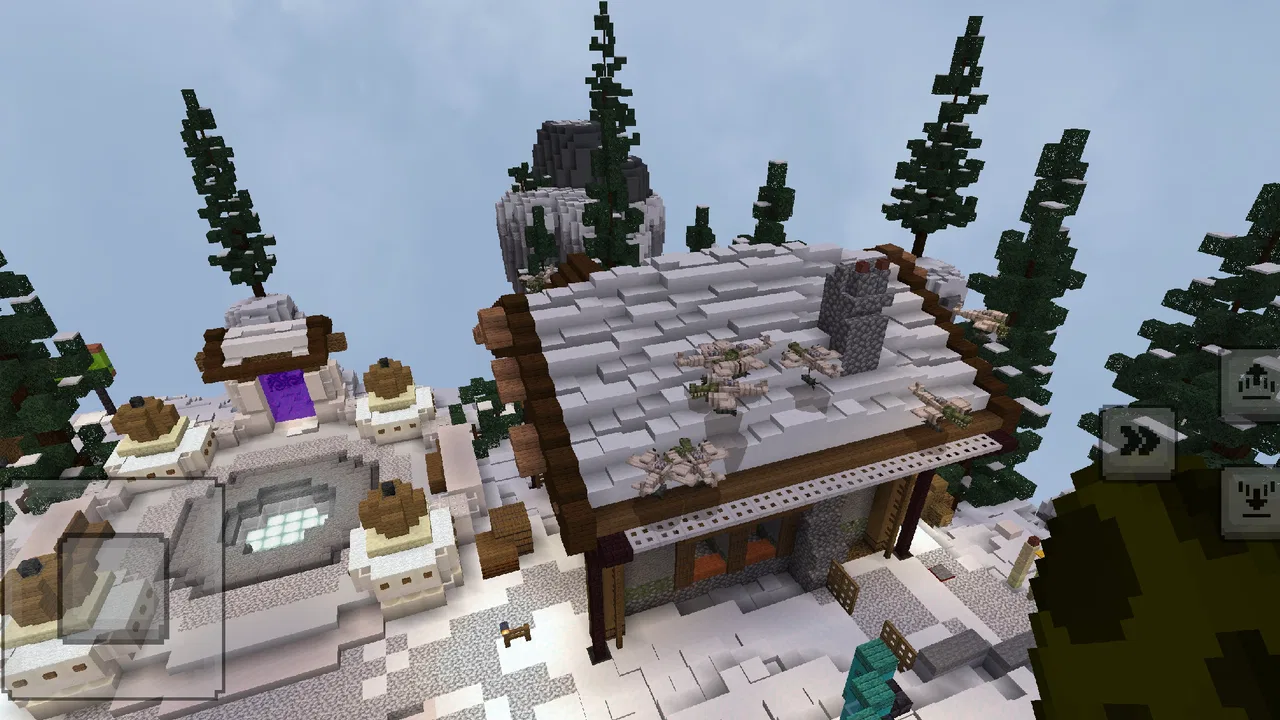
Steal Brainrot Craft
- 4.2
- Rating
- 1.00M
- Installs
- Free
- Price

 Analysis by App-foxy
Steal Brainrot Craft caught my attention because it combines a familiar survival loop with a deliberately silly “brainrot” tone. I approached it as a role-playing game rather than expecting a deep traditional adventure, and that distinction matters. The main appeal is the relationship between building a home, collecting what the environment offers, and making enough progress to stay comfortable in a playful world.
My first impression was that the crafting-and-survival idea is easier to understand than the joke-heavy presentation. You are not simply wandering around looking for entertainment; the game gives your activity a practical purpose. Resources support your shelter, your shelter supports your next outing, and each outing gives you a reason to improve what you have already made. That loop is the real capability worth examining.
Why the home-building survival loop matters
The strongest part of the experience is the way resource gathering and home crafting are tied together. In many lightweight role-playing games, collecting materials can feel like a chore inserted between more exciting moments. Here, gathering has a visible destination: the place you are creating for yourself. Even a small improvement feels more meaningful when it changes the space you return to.
You May Also Like

 Blood Strike: 2.5 Anniversary
Blood Strike’s Loadouts Turn Every Drop Into a Tactical Gamble
A close look at Blood Strike’s custom loadouts: how fast access to signature weapons reshapes its battle royale rhythm, rewards preparation, and narrows the gap between fights.

 Pandora - Music & Podcasts
Pandora’s Music Is Easy to Start, but Harder to Recover
Pandora’s strength is its low-effort path from a seed to a station. Its weak spot is how much confidence it asks you to place in connection, setup, and quiet recovery.

 8 Ball Pool
 Is Built on Rivalries, Rematches, and Routine
A close look at the rivalries, rematches, shared routines, and unanswered safety questions that turn a quick pool match into a persistent mobile community.

 Samsung Music
’s Quiet Strength Is Playing What You Already Own
Its reach comes less from spectacle than from dependable access to a personal library. That simplicity is both the app’s strongest retention engine and its ceiling.

 AccuWeather: Weather Radar
AccuWeather Review: A Quick, Clear Forecast for Everyday Decisions
For everyday plans, the best forecast is the one you can understand quickly. AccuWeather makes rain timing, radar, and local conditions easy to act on, with a few trade-offs.

 Hill Climb Racing
Why Hill Climb Racing Still Turns Crashes Into One More Run
A tiny car, a bumpy hill and one more upgrade: Hill Climb Racing keeps resurfacing because its simple chaos makes every near-miss feel personal.
More From Our News Desk
View All News


I also liked that the game’s unusual humor gives the survival setting a less serious mood. The “brainrot” identity is not just a label I would associate with a conventional fantasy role-playing game. It makes the experience feel more suited to short, casual sessions, especially when I want something amusing rather than a dramatic story or a demanding combat challenge.
That focus makes the game easier to recommend to someone who enjoys making progress through small decisions. You do not need to treat every session as a major expedition. A quick visit can be used to collect useful materials, adjust your home, and leave with a clearer plan for the next time you play.
Starting with a useful routine
My advice is to avoid spending your first resources randomly. I found the loop more satisfying when I treated the home as a base rather than a decoration. Gather enough to support the next improvement, then use that improvement to make the following gathering trip feel more worthwhile. This approach reduces the sense of running in circles.
A practical routine is to decide on one immediate goal before moving around the world. That goal might be improving the shelter, collecting a particular kind of material, or simply preparing for another session. Because the game is built around crafting and survival, having a small target helps prevent the gathering phase from becoming aimless.
The useful insight is that your home is a planning tool, not only a reward. When I viewed it that way, the game felt less like repetitive collection and more like a sequence of manageable choices. Players who enjoy arranging progress around a personal base will probably get more from this design than players who only want constant action.
How the gameplay feels in everyday use
I can easily imagine playing it during a short break. I might start with the intention of making one small improvement, spend a few minutes collecting what seems relevant, and stop after the home feels slightly better than before. That kind of session works because the central loop does not require a long uninterrupted commitment to feel complete.
It also suits a relaxed evening when I want a game that gives me something to do without demanding complete concentration. The playful theme keeps the mood light, while the survival structure provides enough direction to stop the experience from becoming a purely aimless sandbox.
At the same time, the game is not automatically effortless. Survival-style loops still ask me to pay attention to what I am collecting and why. If I ignore that connection, the experience can become a repeated cycle of gathering without a satisfying payoff. The best results come from treating each trip as preparation for a specific improvement.
Small decisions that improve the experience
One useful habit is to separate “needed now” materials from items that are merely convenient to have. Carrying an unfocused collection of resources can make a session feel busy without making it productive. I found it better to choose a priority, gather toward it, and reassess after returning to the home.
Another tip is to resist the urge to change everything at once. A home that grows in deliberate stages gives the crafting loop a clearer rhythm. If I tried to pursue several improvements simultaneously, the purpose of each trip became less obvious. Concentrating on one practical change made progress easier to notice.
The humorous theme also works best when I do not expect it to replace depth. I enjoy the contrast between a familiar survival task and the game’s absurd presentation, but the joke is not a substitute for a large role-playing narrative. That is an important expectation to set before downloading it.
Where it stands among role-playing alternatives
Compared with a story-led role-playing game, this one puts less pressure on character drama and more on the satisfaction of building and maintaining a personal space. If I want dialogue, elaborate quests, or a carefully directed adventure, I would choose a different type of game. Steal Brainrot Craft is more appealing when I want to shape my own short-term objectives.
It also differs from a pure building sandbox. The survival angle gives gathering a reason beyond decoration, while the role-playing category suggests a more game-like sense of progression. That combination may be a good middle ground for players who find open-ended construction too vague but find traditional role-playing campaigns too demanding.
Against a fast action game, its pace is calmer. The most rewarding moments come from preparation and gradual improvement rather than constant reaction. Players who need immediate excitement in every minute may find the rhythm slow. For me, that slower structure is precisely what makes it useful as a casual game.
Who benefits most from the design
I think the best audience is someone who likes collecting, crafting, and making a base feel progressively more useful, but who also enjoys a deliberately unserious theme. It is a particularly natural fit for players who prefer self-directed goals and do not need a heavy story to keep playing.
It may also work well for people who are new to survival games. The basic idea is easy to understand: gather materials, use them to improve your surroundings, and return to the world with a new purpose. The playful presentation can make the genre feel less intimidating than a serious survival setting.
I would be more cautious about recommending it to someone looking for a competitive challenge, a long cinematic campaign, or a highly complex role-playing system. The central pleasure is the loop itself. If that loop does not appeal to you, the humorous presentation alone is unlikely to carry the whole experience.
Practical details before installing
The game is free, has an Everyone age rating, and is developed by AnnA. It is listed for devices running Android seven or later, so anyone using an older phone should check compatibility before planning to play. The current version is 1.30.2, which is useful to know when comparing the experience on different devices or deciding whether an update is available.
Its reach is already substantial, with over one million installs and an average rating of 4.2 from around three thousand ratings. I would read that as a sign that the central idea connects with a meaningful audience, while still remembering that a rating cannot tell me whether the particular mix of crafting, survival, and humor matches my own preferences.
The listing also shows seventeen written reviews, but I would not use that figure as a substitute for trying the game’s basic loop. The most important question is personal: do you enjoy gathering materials when the reward is an improved home rather than a dramatic story event?
Tradeoffs that become clearer over time
The biggest tradeoff is focus. Concentrating on crafting and survival gives the game a clear identity, but it also means the experience may feel narrow if I want many different kinds of activity. A focused loop can be relaxing, yet repetition becomes more noticeable when I am not interested in improving my base.
There is also a balance between freedom and direction. Self-directed play is satisfying when I already know what I want to build or improve. It is less comfortable when I want the game to tell me exactly what to do next. In those moments, a more quest-driven role-playing game would probably serve me better.
The brainrot-inspired tone is another clear dividing line. I found it gives the game personality, but it will not appeal equally to everyone. Players who prefer grounded fantasy, serious survival, or realistic world-building may find the presentation distracting rather than charming.
Finally, the free entry point makes it easy to test without committing money, but free access alone does not guarantee that the loop will remain interesting for every player. I would install it with a simple trial goal: gather enough to make one meaningful home improvement, then decide whether that process feels rewarding.
My recommendation for a first session
For a first session, I would avoid trying to understand everything at once. Start by learning what the environment offers, collect with one improvement in mind, and return to the home before the session becomes unfocused. Notice whether the act of turning gathered materials into a more useful personal space feels satisfying.
If it does, continue by setting slightly larger goals. Instead of collecting simply because resources are available, ask what the next trip is meant to accomplish. This turns the game into a sequence of small projects and makes the survival aspect easier to manage.
If the loop already feels repetitive after that short test, I would not expect the comic theme to solve the problem. In that case, a story-focused role-playing game or a more action-oriented alternative would likely be a better use of your time.
My final take on the experience
Steal Brainrot Craft works best when I approach it as a light, self-directed crafting adventure with survival flavor. Its most convincing feature is not the unusual name; it is the way gathering becomes meaningful when it feeds directly into a home that represents visible progress.
I recommend it to players who enjoy calm resource loops, incremental building, and humorous presentation. It is free, accessible to an Everyone audience, and established enough to have passed one million installs, while its 4.2 average suggests a generally positive reception. Those details make it easy to try, but the real decision comes down to whether you enjoy setting your own small objectives.
My honest recommendation: give it a chance if you want a playful survival game for short, goal-based sessions. Skip it if you need a deep story, intense action, or a highly structured role-playing campaign. For the right player, the simple act of gathering, returning, and improving a personal home can be surprisingly satisfying.
FAQs for Steal Brainrot Craft
01What is the main objective of Steal Brainrot Craft?
Steal Brainrot Craft is an engaging puzzle adventure game where players solve intricate challenges to progress through different levels. The main objective is to use strategic thinking and creativity to unlock new areas and gather resources to build and upgrade your virtual world.
02Is Steal Brainrot Craft free to play, and are there in-app purchases?
Steal Brainrot Craft is free to download and play, making it accessible to a wide audience. However, it does offer optional in-app purchases, which allow players to acquire additional resources, special items, or speed up progression. These purchases are not necessary to enjoy the full experience of the game.
03What platforms is Steal Brainrot Craft available on?
Steal Brainrot Craft is available on both Android and iOS platforms. This allows players with different mobile devices to enjoy the game. Simply visit the Google Play Store or Apple App Store to download the app and start your adventure.
04What are the system requirements for Steal Brainrot Craft?
To run Steal Brainrot Craft smoothly, Android users need a device running Android 5.0 or higher, while iOS users require iOS 11.0 or later. Ensure your device also has sufficient storage space and a stable internet connection to enjoy the game without interruptions.
05Is there a multiplayer mode in Steal Brainrot Craft?
Yes, Steal Brainrot Craft includes a multiplayer mode that allows players to collaborate or compete with friends and other online players. This feature adds an exciting social dimension to the game, encouraging teamwork and strategic planning in real-time challenges.
Pros
- Engaging puzzles keep players hooked.
- Unique art style enhances gameplay.
- Smooth controls for easy navigation.
- Regular updates add new challenges.
- Offline mode available for on-the-go play.
Cons
- Occasional bugs disrupt gameplay.
- In-app purchases can be pricey.
- Limited character customization options.
- Requires frequent internet connection.
- Some levels feel repetitive over time.

Steal Brainrot Craft
Gallery